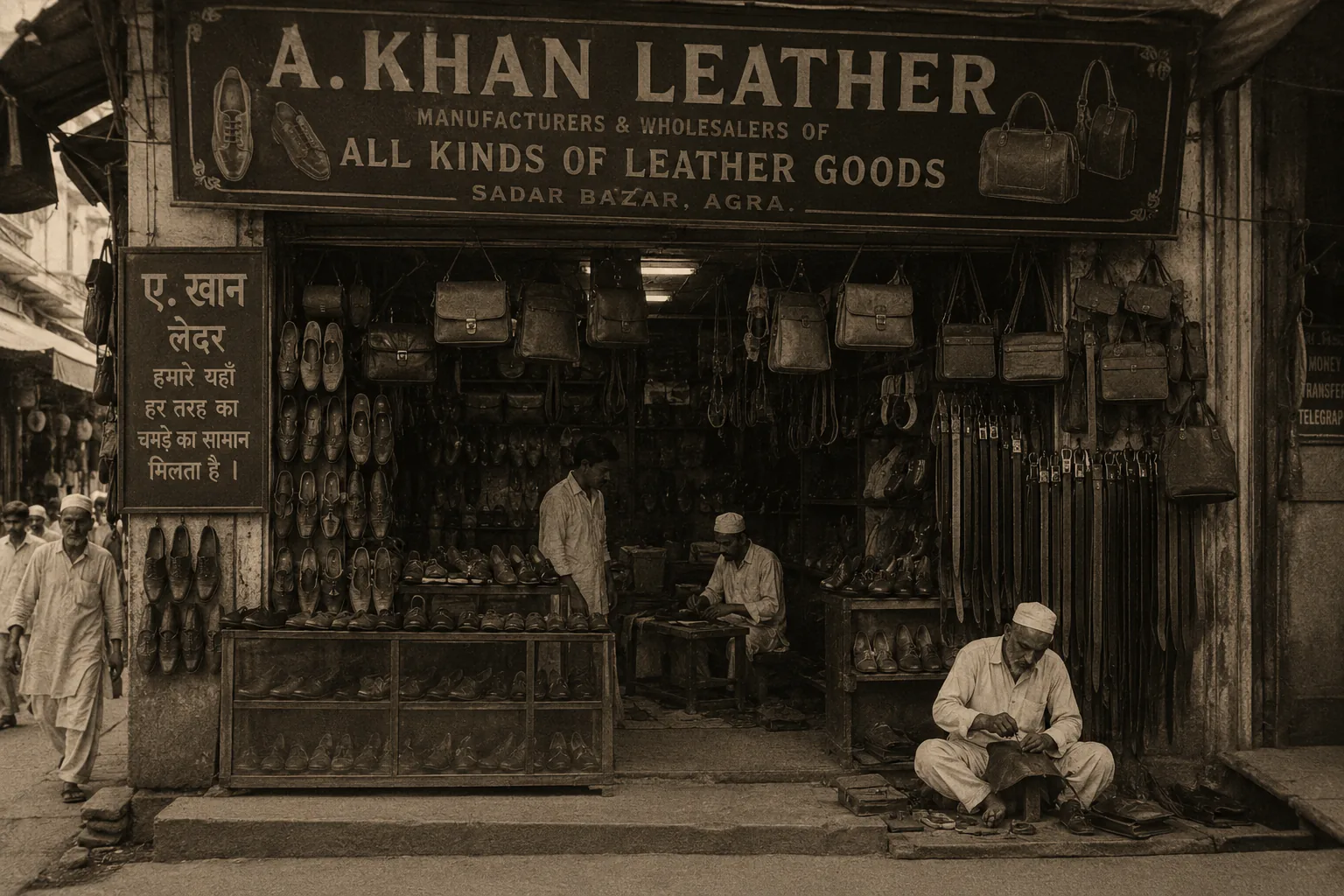
The House of Latif
"The hide knows when you are in a hurry. Slow down, and it will give you something worth keeping."
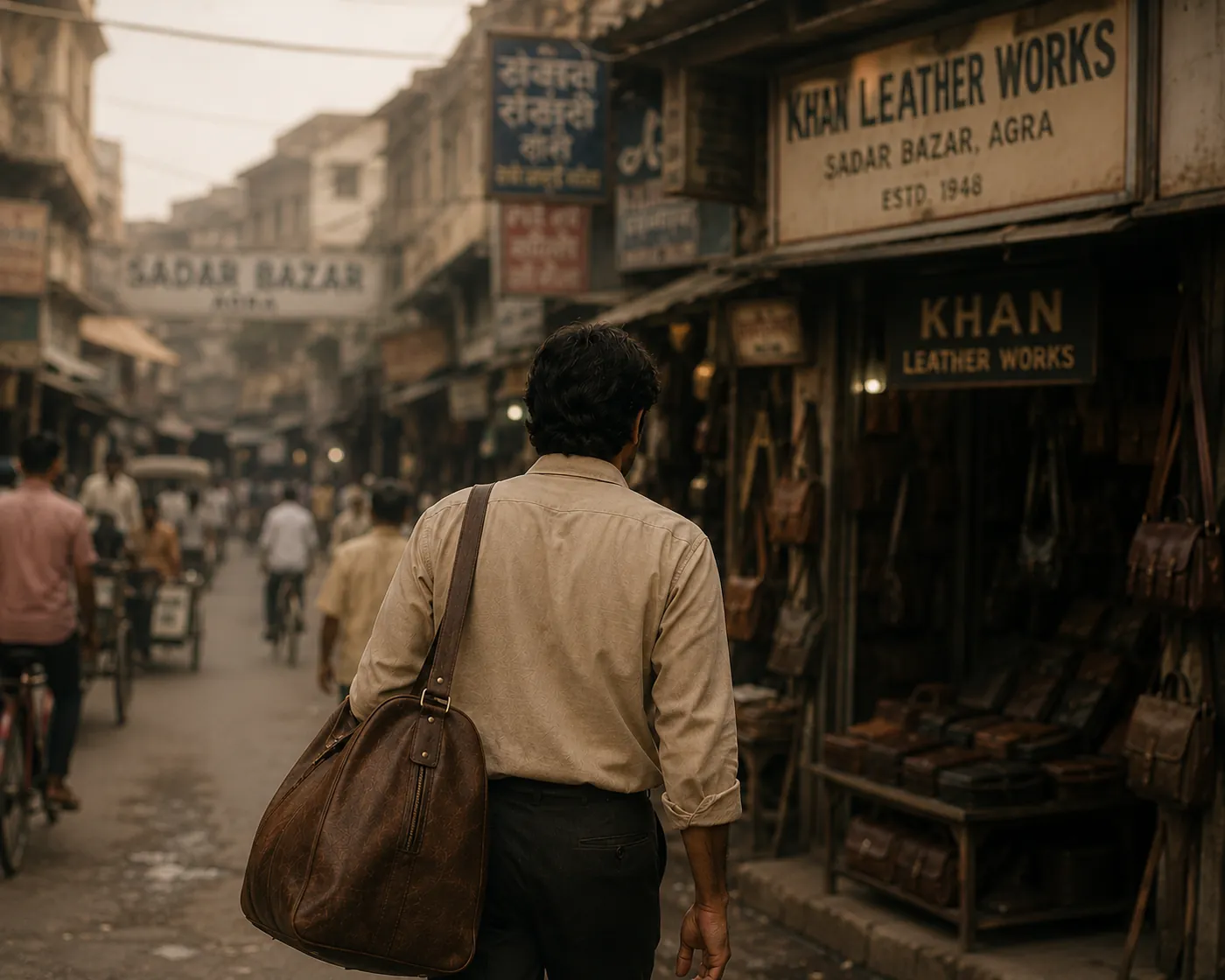
In the autumn of 1985, in a narrow lane of Sadar Bazaar's old shoe market in Agra, Arshad Latif set up a workbench no larger than a tea-tray. He owned two awls, a single stitching pony, and a quiet conviction that beauty is built slowly.
His first customers were friends. His first piece — a satchel he refused to sell for three months because, he said, "It is not yet finished." It still hangs, framed, above the atelier door.
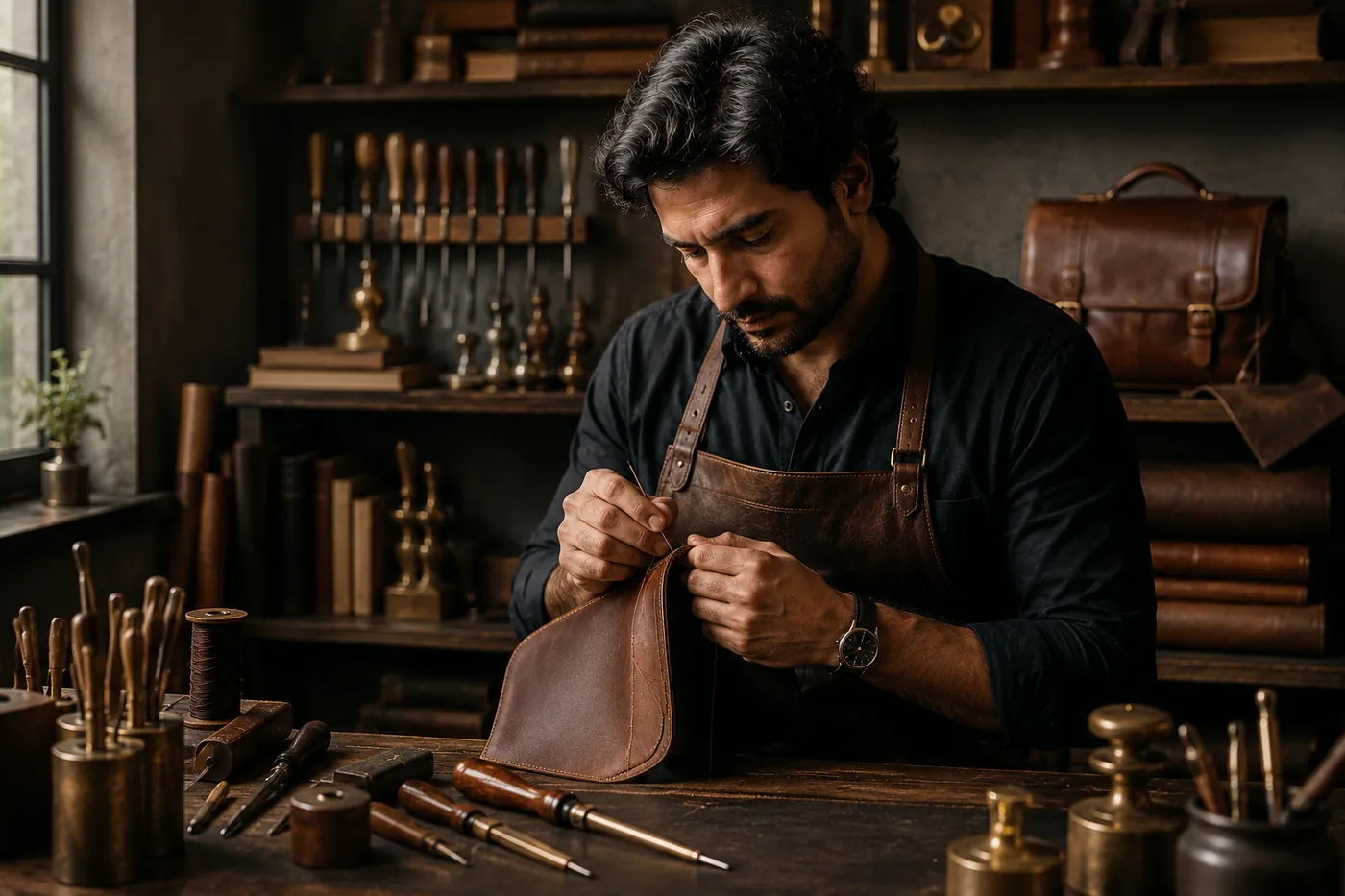
Amjad — known to family and patrons as Zain — grew up under his father's bench. He learned to burnish an edge before he learned to write his name, and he inherited not only the tools — the brass templates, the cedar awls, the cracked-leather stool — but the patience that made them mean something.
Today, Amjad leads the atelier his father built. The hides are nobler. The clients travel further. The patience, unchanged.
"My father did not teach me to make leather goods. He taught me to listen to the leather, and to never stitch in a hurry. Everything else came after."Amjad Latif (Zain) Agra · Atelier of Akhan Leather
Only the upper third of full-grain vegetable-tanned hides — chosen by feel, not by grade. We turn away more leather than we accept.
Saddle-stitched with waxed linen, eight stitches to the inch, by a single artisan from first cut to final burnish. No assembly lines.
We make no more than forty pieces a month. A briefcase takes seven days. A jacket, twenty-one. We do not negotiate with time.
We receive a small number of clients each week. Write to us with a date and we will set aside the afternoon — and a pot of cardamom chai.